5 Tips for Managing Lawn and Landscaping Equipment Maintenance for Large Fleets
A thriving lawn and landscape business relies heavily on the outdoor power equipment used to care for customer properties. The tools in your equipment fleet are vital for mowing, trimming, and maintaining customer lawns and completing landscape renovation tasks.
Buying quality, reliable equipment is a good first step toward making sure your equipment fleet stays up and running. To keep the equipment performing at peak efficiency for as long as possible with minimal downtime, you’ll also need to stay on top of routine maintenance.
With large fleets, maintenance management can become quite a challenge. It’s hard to keep track of which pieces of equipment are due for maintenance without a plan for prioritizing and scheduling maintenance. With some planning, though, you can set up a system for managing maintenance for large equipment fleets that helps you minimize downtime and keep your company running smoothly.
Creating a Preventive Maintenance Schedule
The first order of business is to schedule inspections and regular maintenance. Taking the time to go through daily and weekly inspection checklists helps catch any issues early, when they’re often a quick fix. It’s much more manageable if you can schedule the maintenance rather than reactively repairing equipment when something goes wrong.
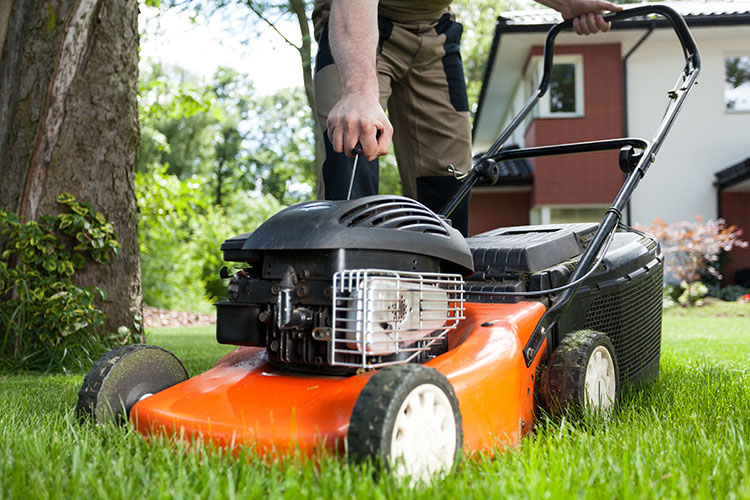
Daily and weekly inspection checklists help your team catch problems before they become larger issues. Tightening loose bolts, adding air to tires with low pressure, or greasing lubrication points at the start of the day might prevent more costly problems later.
In addition to inspection checklists, set up a schedule for regular maintenance. We all know that air filters need to be cleaned, lawn mower blades need to be sharpened, drive belts should be checked for cracks, and four-cycle engines require regular oil changes. It can be easy to push those routine maintenance tasks back, though, if you don’t have them on a schedule. Scheduling maintenance and sticking to your schedule helps you ensure you don’t fall behind on maintenance or overlook any equipment in your fleet.
Digital Tools and Maintenance Tracking
As your company and fleet grow, it gets harder and harder to track maintenance schedules on spreadsheets and whiteboards. Fleet management software and apps can help track service intervals, warranty coverage, and parts replacement across all the equipment in your fleet. It’s a good tool to help your company stay on top of routine maintenance, standardize daily and weekly equipment inspections, and track downtime and repairs for each piece of equipment.
You can do all that manually, of course, but technology can make the job much easier. More and more green industry pros are adopting technology to streamline fleet management. Using software to manage that side of the business frees up time for you to focus on other tasks, like performing maintenance, handling customer service, and growing your company.
When you’re shopping for fleet management software, take the time to compare several different options. Talk with your team and come up with a list of goals for what you want the software to do. Then, ask if you can try the software that you’re considering before committing to purchase it. You’ll often be able to demo a software product to see how it works before deciding to purchase the software and implement it for your entire fleet.
Prioritizing High-Use Equipment
One of the things that fleet management software can help with is identifying which machines require the most frequent attention. Most equipment manufacturers base their routine maintenance recommendations on operating hours (e.g. change the oil every 100 hours). Tracking high-use equipment and staying on top of maintenance helps you avoid costly downtime.
Tracking how often you use equipment and how often it requires unplanned maintenance can also help you identify when equipment might need to be replaced. If you’re thinking of purchasing new equipment to expand or replace tools in your fleet, click here to check out our article on Equipment Fleet Selection, Maintenance, and Planning.
Operator Training and Accountability
The teams working with equipment every day are in the best position to spot early warning signs, log issues, and properly care for equipment. Train them to go through inspection checklists, recognize when something goes wrong, and respond to potential issues.
If you already use or plan to implement fleet management technology, make sure your whole team is trained to use that technology. The software functions best when everyone on the team works together to use the technology.
Here at Richardson Saw, we do several operator training sessions every year with large companies. These training sessions include topics such as how to properly use the equipment and what to look for each day to get ahead of any problems that might occur. We can help you support ongoing education for your team to help them manage equipment maintenance for large fleets.
Balancing In-House vs. Dealer Service
Some maintenance is easy for trained equipment operators to handle on their own. Routine maintenance like cleaning or replacing air filters and spark plugs can easily be performed in-house. For larger repairs, you need to decide if you’re going to hire a technician to work at your company or outsource to certified technicians at a local service shop.
Whether you handle repairs in-house or take your equipment to a service center, it pays to develop a relationship with a local service center that has a large parts inventory. Here at Richardson Saw, we have one of the largest parts inventories in North Texas. You can purchase parts here for in-house repairs, and if you work with our service center for repairs, that parts inventory helps us provide a quick turnaround on repairs for all our clients.
Come visit Richardson Saw & Lawnmower to see for yourself why we’ve been an industry leader for over 50 years. We provide landscape professionals and contractors with the best service possible and a full line of quality outdoor power equipment at the most competitive prices.