Whether to use gas-powered or battery-powered lawn equipment is at the forefront of buying decisions now, both for home and commercial applications. A growing number of bans on gasoline-powered small engines is forcing some people to switch to battery-powered equipment. Even in areas without such restrictions, the benefits of battery power make those tools a good choice for many people. At the same time, gasoline-powered equipment has benefits, too, and it’s still the preferred choice of many.
What about when you’re buying a chainsaw? Is battery or gasoline a better choice?
For professional landscaping crews, the choice really depends on how you’ll be using the saw. Other factors, including where you work and how many saws you plan to buy, will also influence your decision.
Reasons To Buy Battery-Powered Saws
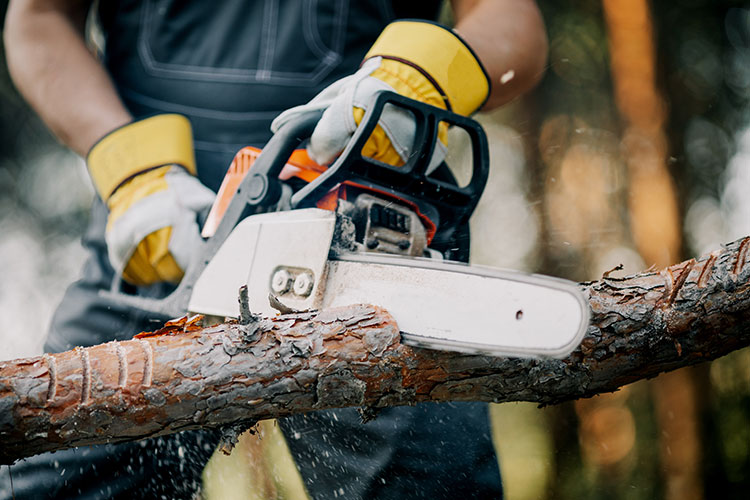
Battery-powered chainsaws offer plenty of perks that make them a good choice for professional use. For one thing, electric motors typically provide much quieter operation than gasoline models, making them ideal for residential or noise-sensitive zones. In locations with restrictions on gasoline-powered equipment, battery-powered chainsaws might be the only option available. They have no engine emissions, making them an environmentally friendly choice.
Like other battery-powered equipment, battery chainsaws require less maintenance than gasoline saws. The big difference is that you don’t have an engine to maintain. You’ll still need to clean the saw and maintain the bar and chain, but you don’t have the extra work that comes with engine maintenance.
Battery-powered equipment is portable and often lightweight. Battery chainsaws can also provide quite a bit of cutting power, comparable to many gasoline-powered saws. And if you have multiple pieces of battery-powered equipment from the same manufacturer, you can often use the same batteries in them and the chainsaw. The more battery-powered equipment you buy from the same line, the more convenient it is.
Reasons To Buy Gasoline-Powered Saws
There are several reasons why you might want to purchase a gasoline-powered chainsaw. The biggest reason is if you need more cutting power. While battery-powered saws can provide plenty of power for tree trimming, small-scale cleanup work, and cutting some firewood, they’re not powerful enough for heavy-duty tree removal or large-scale storm cleanup.
Runtime is also a major perk for gasoline-powered saws. With a battery saw, you’ll run through the charge pretty quickly if you’re doing a lot of cutting work. You’ll either need to stop and recharge the battery or carry charged batteries with you. Gasoline-powered saws offer longer runtimes and you can refuel them quickly.
Besides cutting power and runtime, another thing you’ll need to keep in mind when picking between battery or gas is bar length. Most battery-powered chainsaws have bar lengths of 12 to 16 inches, though some go up to 18-inch bars. For longer bar lengths, you’ll have to go with a gasoline-powered saw.
You can’t get zero emissions with gasoline-powered engines like you can with battery-powered motors, but modern gas chainsaws are much more fuel efficient and have lower emission levels than older saws. If you’re concerned about the environmental impact, just make sure you buy from a quality brand like STIHL that invests in improving engine technology.
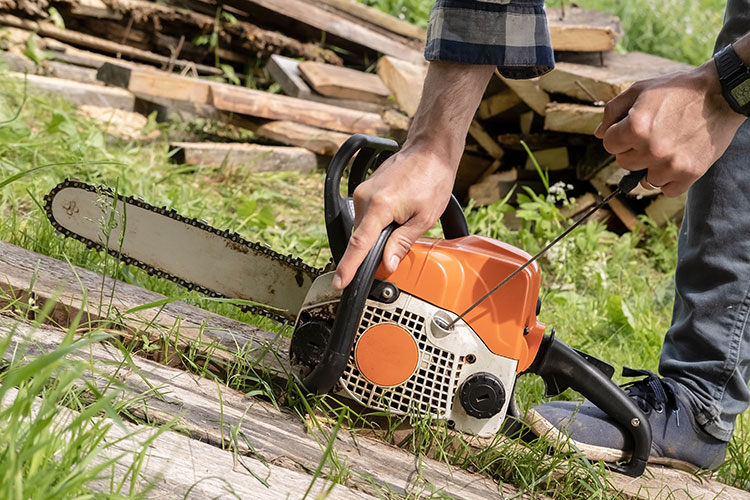
Cost of Ownership Considerations
When you’re looking at battery and gas-powered chainsaws, you’ll often see that gasoline-powered saws are much less expensive than comparable battery-powered versions. You might find, though, that there isn’t much of a difference in long-term costs or that battery power ends up being less expensive.
To make an informed buying decision, you’ll need to consider the total cost of ownership, including fuel and maintenance. Both maintenance costs and fuel costs will be much lower for battery equipment. As a general rule, you can save money by switching to battery-powered equipment for hand-held tools like trimmers and chainsaws.
For example, STIHL’s cost-savings calculator estimates that their most powerful battery-powered chainsaw, the MSA 300 C-O, can save you over $3,000 per year compared to their gasoline-powered MS 271. (That’s assuming you have 5 batteries for the saw and pay $0.51 per KWH compared to using 24 gallons of gas a week at $3.50 per gallon for 40 work weeks in the year.) At that rate, you’d recoup your initial investment in the battery-powered saw in about 9 months.
Why You Might Want Both
Battery-powered chainsaws are great for in-town work and small-scale jobs. They’re perfect if you need to work quietly, trim small limbs, do some light cleanup after a storm, or cut firewood. But for larger-scale cutting tasks and for cutting hardwoods like hickory, maple, and oak, you’ll need a gas-powered chainsaw to keep up with the workload.
Many people find that it makes sense to have both types of saws. If you’re going to tackle a quick cutting job or need to keep the noise levels down, you just get out the battery saw. If you need to tackle major cleanup work after a storm or cut down some good-size trees, the gasoline-powered saw will be your go-to choice. They’re best suited for different types of work, and if your landscaping crew tackles a variety of wood-cutting tasks then it makes sense to have different tools for different jobs.
Whether you opt for battery-powered, gasoline-powered, or both types of chainsaws, Richardson Saw is the local dealer you can count on for quality, professional equipment. We carry a wide selection of commercial-grade chainsaws from top brands including STIHL, EGO, Echo, and more. If you have any questions about your options and which type of saw will work best for your crew, just stop by and ask us. Our friendly, knowledgeable equipment experts will be happy to answer your questions and help you find just the right chainsaw(s) for your needs.